What I actually did in my first thirty days as the only marketer, in order
Table of Contents
A plain guide to what product marketing does, who does it, and the simple frameworks that make your product easier to sell.
Introduction
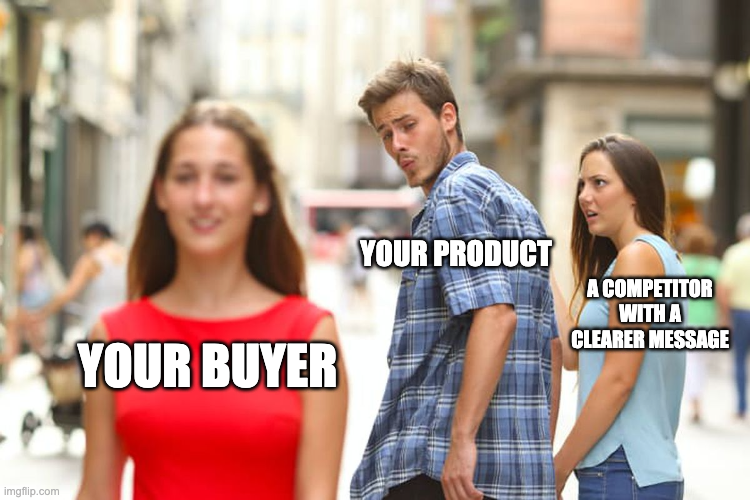
Your product probably is not failing because it is bad. It is failing because people cannot tell what it does, who it is for, or why they should care right now.
That gap, between what you build and what a buyer actually gets, is the thing product marketing exists to close. I have spent seven years working on that gap inside B2B tech startups, and it is the most misunderstood job in the building. A lot of people think it means making nice slides. It is much bigger than that.
Here is what product marketing really is, what a product marketing manager does, and the simple frameworks that turn a confusing product into one people buy.
Key Takeaways
- Definition. Product marketing is the work of taking your product to market and keeping it selling. It owns how your product is positioned, described, launched, and sold.
- It is strategy first. The job starts with research and positioning, well before any campaign.
- The core is four things: positioning, messaging, launches, and research. The Product Marketing Alliance calls these the “Foundational Four.” Sales enablement is now a fast-growing fifth.
- It is not product management. One role decides what to build. The other decides how to sell it.
- The market is shifting. Forrester expects more than half of large B2B purchases to run through self-serve digital channels, so your message often sells before sales ever talks to anyone.
- The real deliverable is clarity. Every framework here helps you answer one question: why should this buyer pick your product, right now?
What Is Product Marketing? A Simple Definition
Product marketing is the work of taking your product to market and keeping it selling. It decides how your product is positioned, how it is described, who it is for, how it launches, and how your sales team sells it.
That is it.
The Product Marketing Alliance describes it as the end-to-end work that brings a product to market and keeps it thriving: positioning, messaging, segmentation, go-to-market planning, sales enablement, and the feedback loops after. I like that because it kills the most common myth, the idea that product marketing is just promotion.
Promotion is the loud part at the end. Product marketing is the quiet work before it that decides whether the loud part will even land.
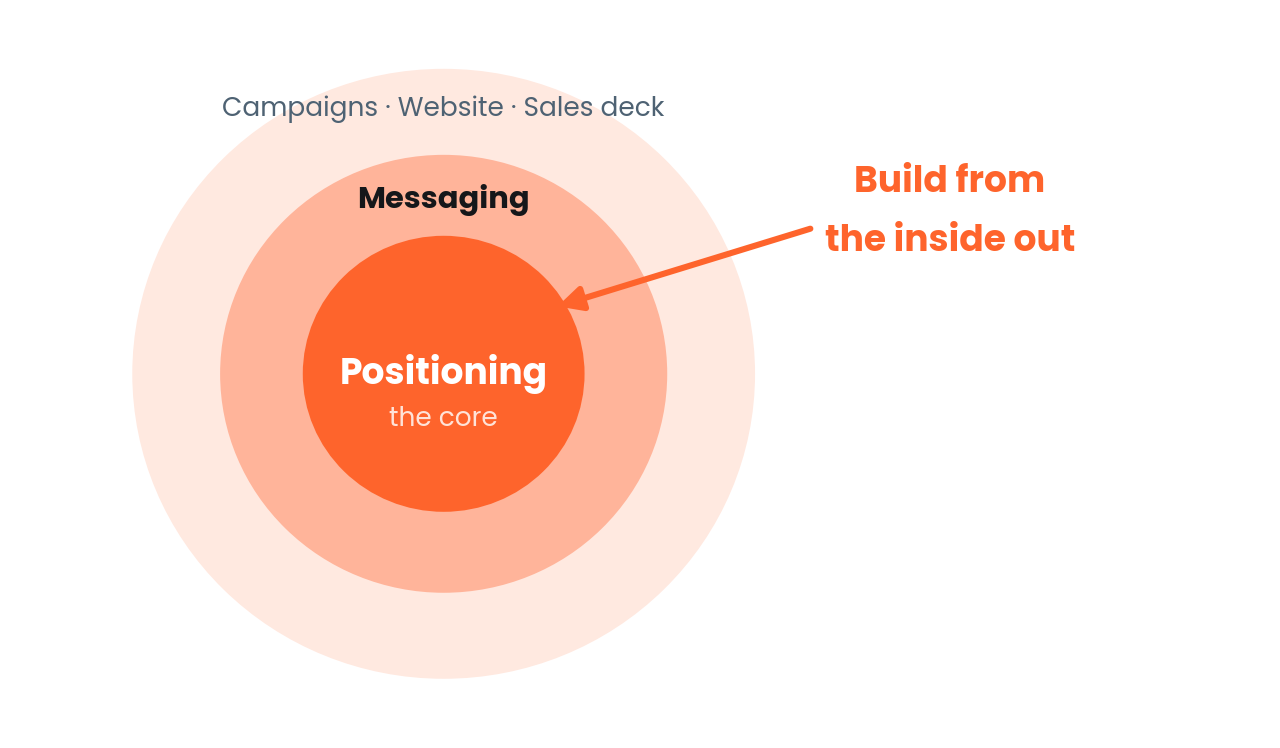
Picture your product’s story as an onion. The core is positioning: where you fit and why you are different. The next layer is messaging, the words that carry that position. The outer layer is your campaigns, your website, your sales deck. Most teams start painting the outer layer before the core exists. That is the mistake. Build from the inside out instead.
What Does a Product Marketing Manager Do?
A product marketing manager, or PMM, owns that story start to finish. The exact mix shifts from company to company, but the work almost always touches these areas.
It starts with research. You study the market, the competitors, and most of all the buyer. You learn how they talk about their problem in their own words, because you cannot position a product for a buyer you do not understand.
Then comes positioning and messaging. You work out where your product sits, who it is for, and the value it gives, then put that into words a buyer gets right away. This is the heart of the job, and you can go deeper with my five-step product positioning playbook.
There is also go-to-market planning, where you decide how your product reaches the market: the audience, the channels, the message, the order. I broke down the full system in my go-to-market playbook guide.
You run launches too, and you build the sales enablement: the pitch decks, one-pagers, and talk tracks that help your reps close. If a salesperson cannot explain your product, the best positioning in the world dies in the room. After launch, you watch how people respond and feed what you learn back into the product and the message.
One thread runs through all of it: clarity. You spend most of the day turning something complicated into something a buyer can follow and a salesperson can repeat. Skip it and you pay for it. In my second startup role, I jumped straight to campaigns before I understood the buyer. They flopped. That was the mistake. Start with research and positioning instead, every time.
The Core Product Marketing Frameworks
You do not need fifty frameworks. You need a few you actually use. Here are the ones worth keeping close.
The Foundational Four (and a fifth)
The Product Marketing Alliance builds the whole discipline around four things it calls the Foundational Four: positioning, messaging, launches, and research. Get those right and most other things fall into place.
What has changed lately is a fifth piece pushing in: sales enablement. The PMA points to a big jump in sales enablement and website work, a sign that PMMs are now expected to own more of the places where a buyer meets the product. The job is widening from “tell the story” to “make sure the story holds up everywhere people run into it.”
A positioning statement you can actually use
Positioning sets where your product fits and how it differs from the alternatives. The simplest way to pin it down is to finish one sentence:
For [buyer] who [has this problem], [product] is a [category] that [gives this benefit]. Unlike [the main alternative], we [the key difference].
It looks basic. It is hard to fill in honestly. If you cannot finish it without hedging, your buyers cannot either, and that confusion costs you deals.
The buyer-stage lens
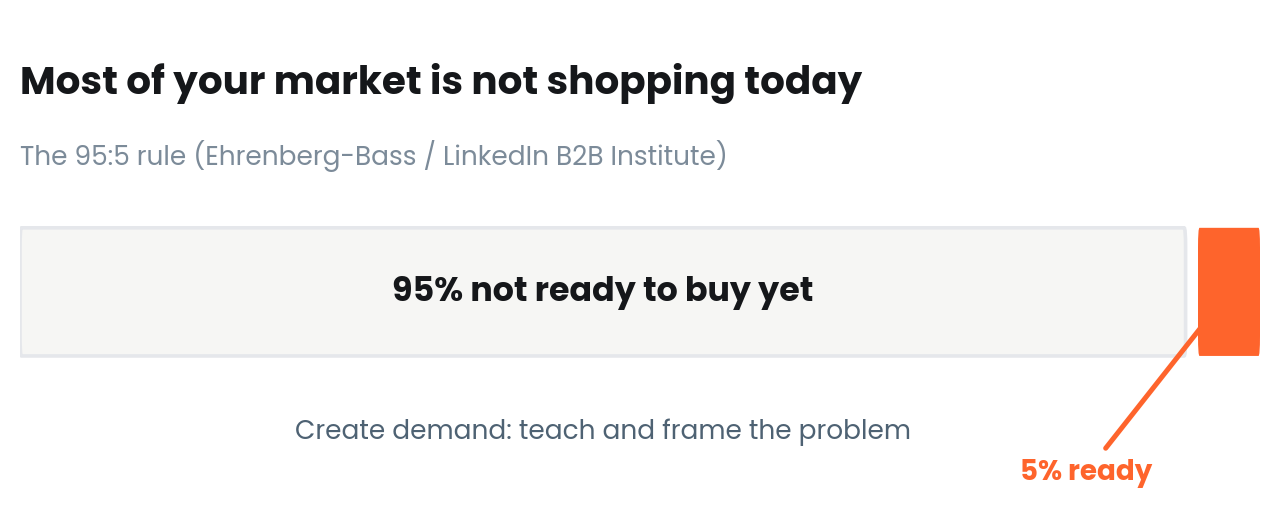
Most of your buyers are not ready to buy today. Research by Professor John Dawes at the Ehrenberg-Bass Institute, published by LinkedIn’s B2B Institute in 2021, found that only about 5 percent of B2B buyers are in the market at any given time. The other 95 percent are not looking yet. People call this the 95:5 rule.
Talk to both. You build demand with the people who are not ready by teaching and framing the problem, and you capture demand from the few who are with clear pricing, comparisons, and proof. Make only bottom-of-funnel content and you are fishing where almost nothing is biting. I get into this in my piece on what demand generation is.
Launch tiering
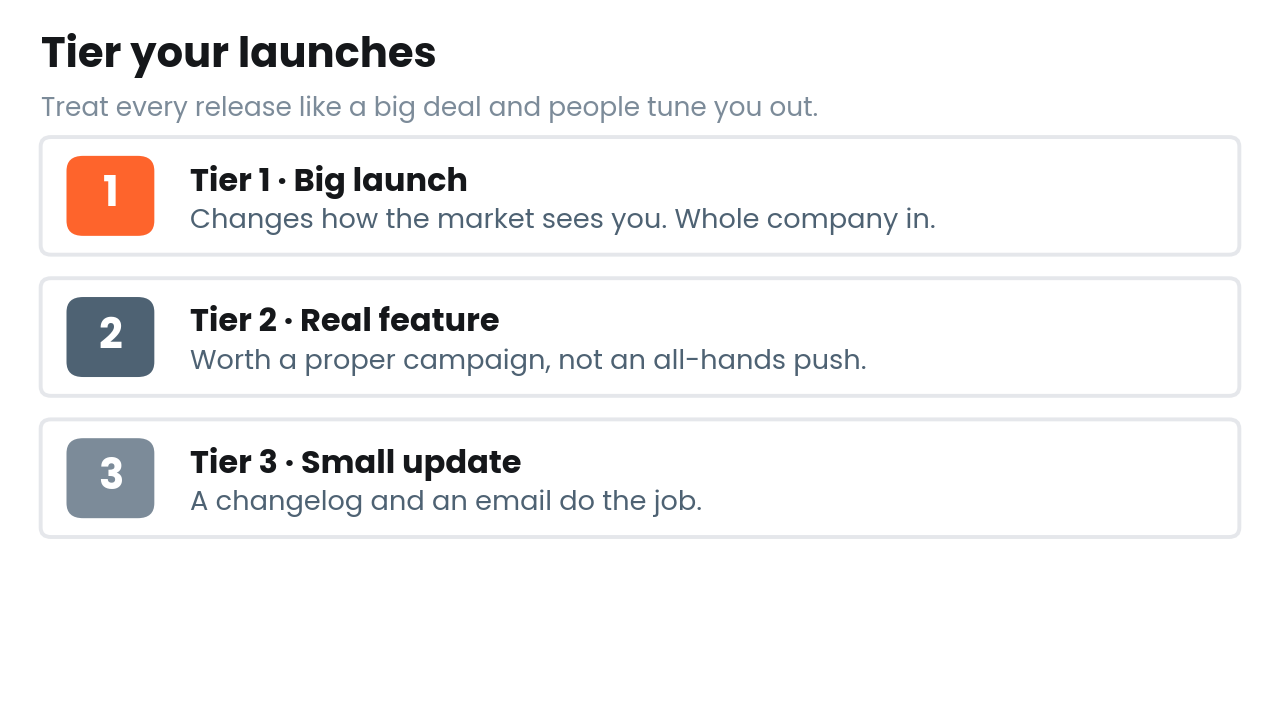
Not every release deserves a parade. Sort launches by size: a Tier 1 changes how the market sees you and the whole company gets involved, a Tier 2 is a real feature that earns a proper campaign, and a Tier 3 is a small update where a changelog and an email do the job.
A Quick Example: Positioning in Action
Frameworks click faster with a real example. Say you sell a scheduling tool for dental clinics.
A vague version sounds like this: “We are a smart, all-in-one platform that helps you work better.” A buyer reads that and learns nothing. It could be software for anyone. Now run it through the positioning template:
For dental clinics who lose money on no-shows, ChairFill is a scheduling tool that fills cancelled slots automatically from a waitlist. Unlike generic calendar apps, we text waitlisted patients the moment a slot opens.
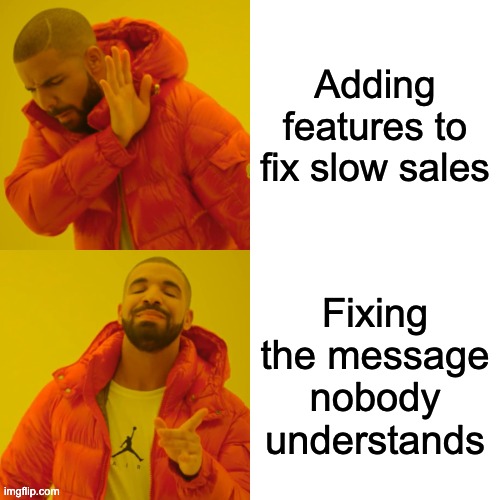
Same product. The second version tells a clinic owner exactly what it does, who it is for, and why it beats the tool they already use. That is the work. You are not adding features. You are removing confusion so the right buyer says yes faster.
Product Marketing vs. Product Management
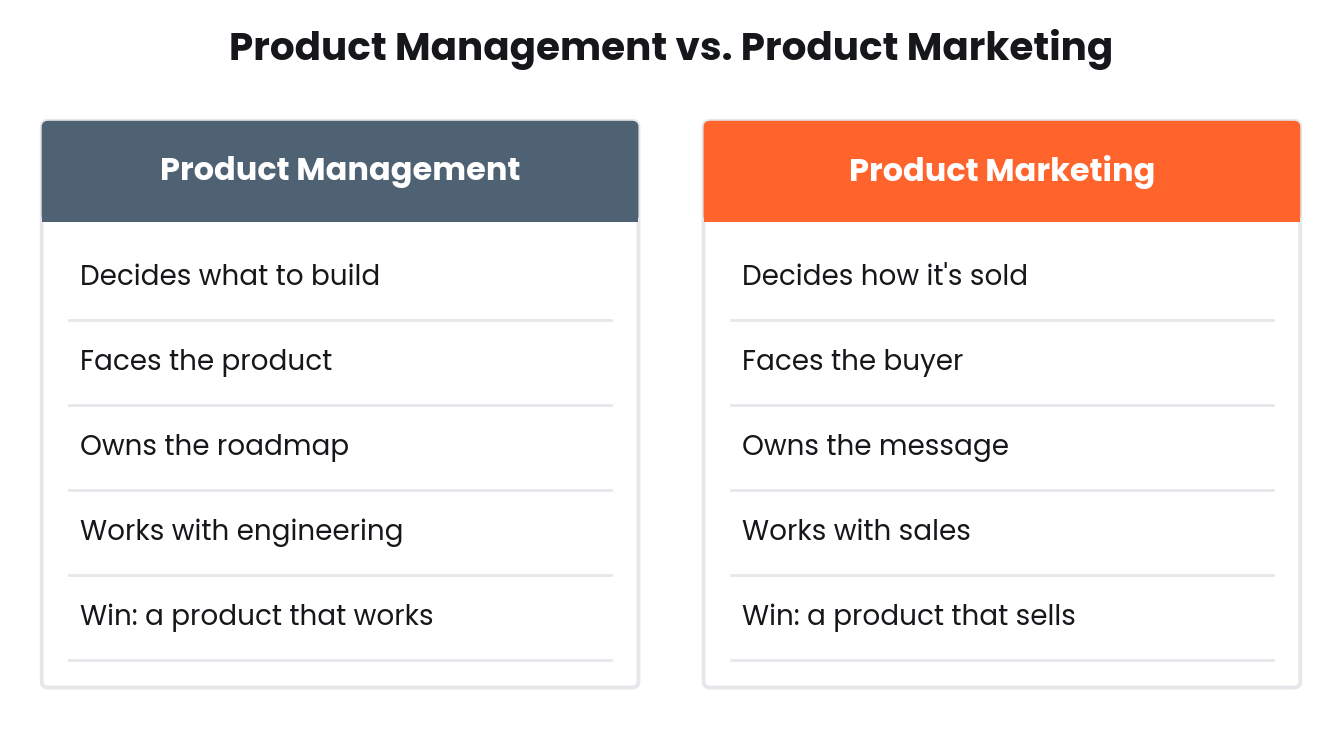
These two get mixed up because the titles look almost the same. They are different jobs. Product management decides what to build and owns the roadmap. Product marketing decides how to take it to market and make people care. One faces the product, the other faces the buyer.
The best companies make these two roles partners, not rivals, because a great product nobody understands and a great message with nothing behind it both lose.
Why Product Marketing Matters More Now
Two things are making this job harder to ignore.
First, buying has gone self-serve. Forrester predicts more than half of large B2B purchases will run through digital self-serve channels. When your buyers do their research alone, before they ever talk to a rep, your positioning and messaging are the ones doing the selling. There is no salesperson in the room to fix a confusing message.
Second, the job is being held to account. Gartner reports that in 2025, product marketing leaders are under pressure to run one clear go-to-market plan and prove what the team is worth. Gartner also found that half of tech CMOs and product marketing leaders name weak teamwork with sales and customer success as a top barrier to growth. The teams that win tie product, marketing, and sales to one clear story.
That clarity is the whole game. Most B2B marketing does not flop because the product is weak. It flops because the message is confusing. Fixing that is the job.
How to Get Started
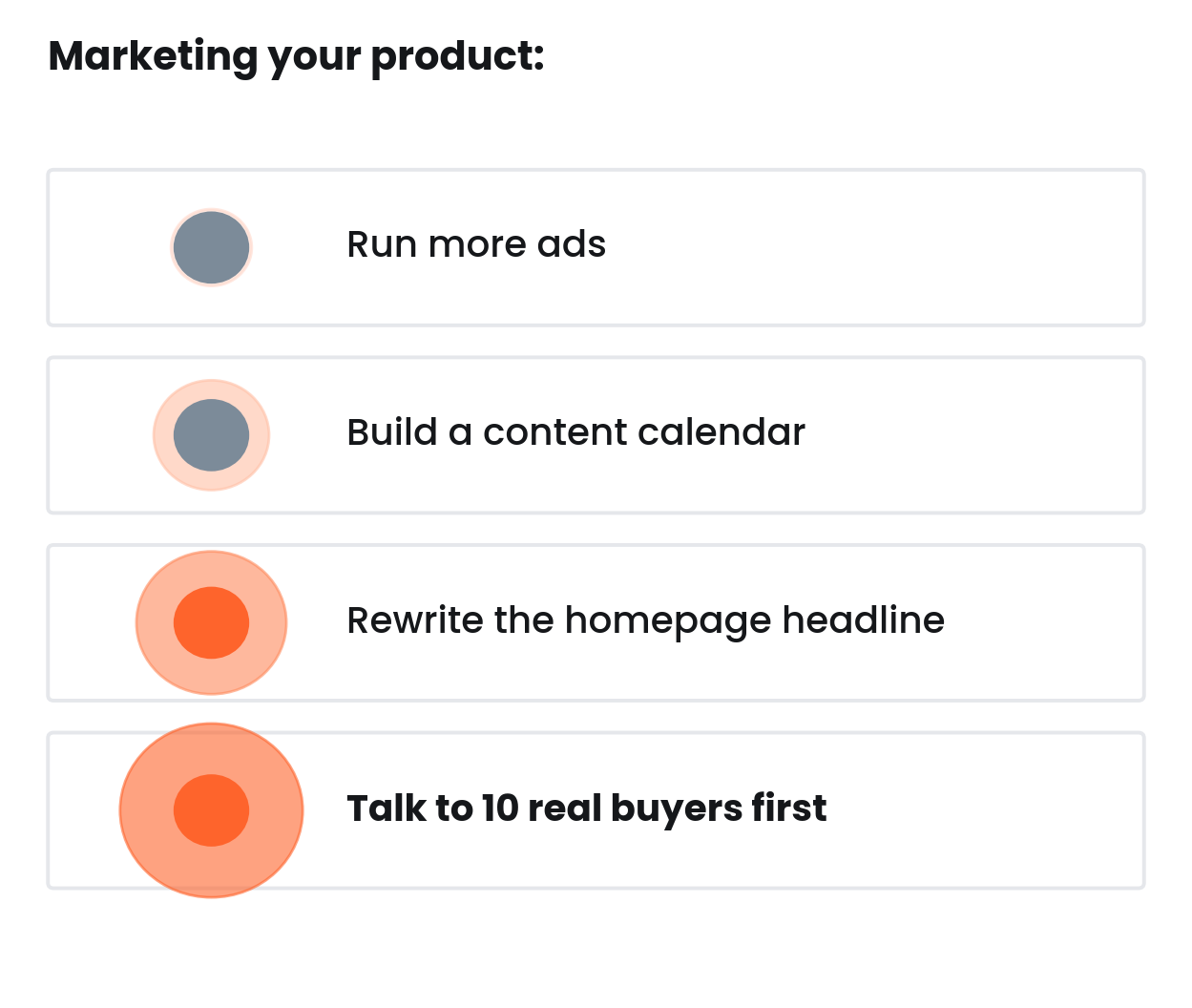
If you are the first product marketer somewhere, do not open a content calendar yet. Start here.
Talk to ten customers and learn how they describe their problem and your product in their own words. That is your raw material. Then write one honest positioning statement using the template above, and get your whole team to agree on it. Next, look hard at your homepage: can a stranger tell what you do, who it is for, and why it is different in about five seconds? If not, fix that first. Finally, build one sales one-pager that makes your product easy to explain, and tier your next launch before you plan it.
None of these are campaigns. Campaigns come later, and they work better once your foundation is clear.
Conclusion
Product marketing is not slides, and it is not promotion. It is the work of making your product clear enough to sell, and that starts with clarity, not noise.
So here is the question I would leave you with. Hand your homepage to a stranger for five seconds. Would they know what you sell, who it is for, and why it beats the alternative? If the answer is no, you do not have a product problem. You have a product marketing problem. And that one you can fix.
Frequently Asked Questions
What is product marketing in simple terms?
Product marketing is the work of taking your product to market and keeping it selling. It covers how your product is positioned, described, launched, and sold. Think of it as the bridge between what you build and what buyers understand.
What does a product marketing manager do?
A product marketing manager owns research, positioning, messaging, go-to-market planning, launches, and sales enablement. The main job is turning a complicated product into a clear story buyers follow and salespeople can repeat.
Is product marketing the same as product management?
No. Product management decides what to build and owns the roadmap. Product marketing decides how to take it to market and make people care. One role faces the product, the other faces the buyer.
What skills does a good product marketer need?
Curiosity about buyers, clear writing, and the ability to make hard things simple. The best ones can sit through a customer call, a sales call, and a product demo and turn all three into one clear message.
What frameworks should a product marketer know?
Start with the Foundational Four (positioning, messaging, launches, research), a one-sentence positioning statement, the buyer-stage lens, and launch tiering. A few frameworks you use beat a shelf of ones you do not.
Why does product marketing matter for B2B companies?
Most B2B buying now starts with self-serve research, so your message sells the product before sales shows up. Product marketing makes sure that message is clear, which is exactly what most failing B2B marketing is missing.
How do you measure product marketing success?
Look at win rates, how fast deals close, whether sales uses your materials, adoption after launch, and whether buyers can repeat back what you do. Clear positioning shows up in shorter sales cycles and fewer confused conversations.
-
Demand Generation Isn't About Getting More Leads
-
How I Build a GTM Strategy Without a Huge Marketing Team
-
Why Marketing and Sales Keep Blaming Each Other.
-
The ICP vs. Buyer Persona Mistake I See All the Time.
-
Product Led or Sales Led? Here's How I Think About It.
Recent posts:
Author

Rosi
Head of Marketing
Go-To-Market • Content • Growth